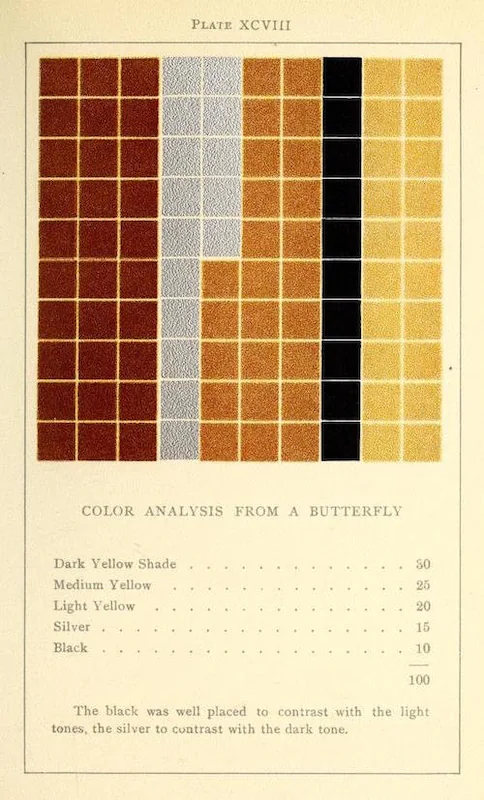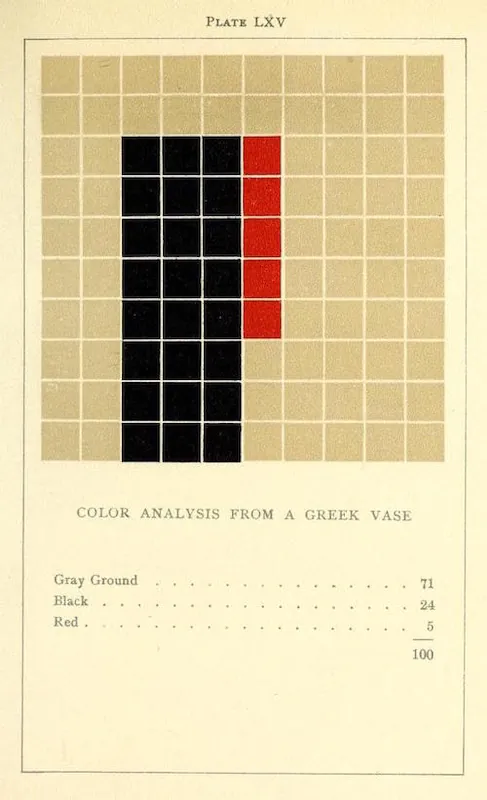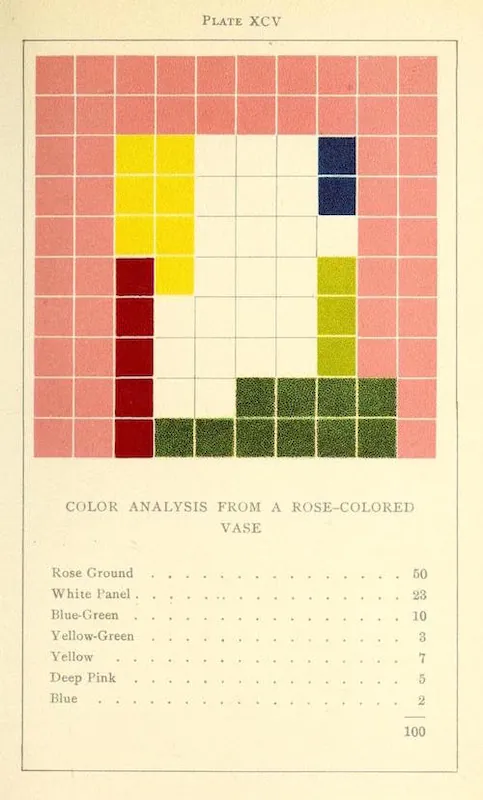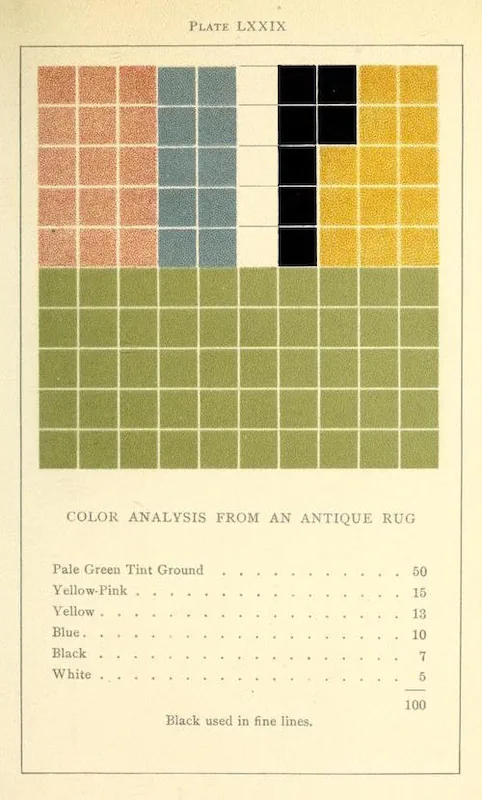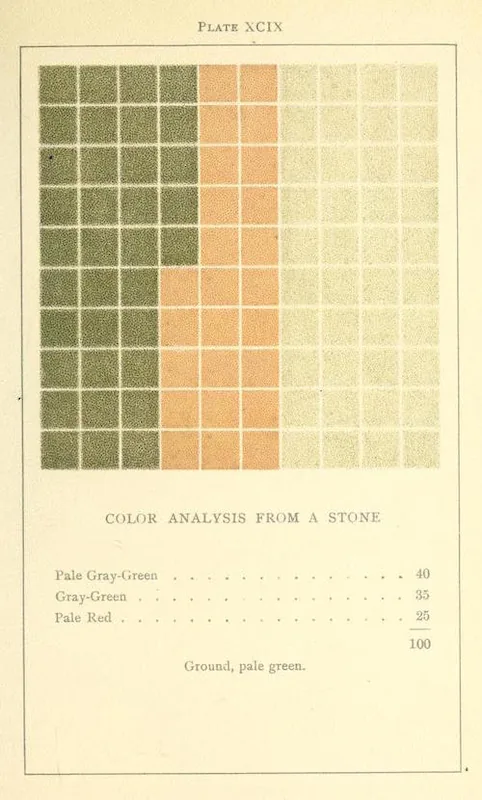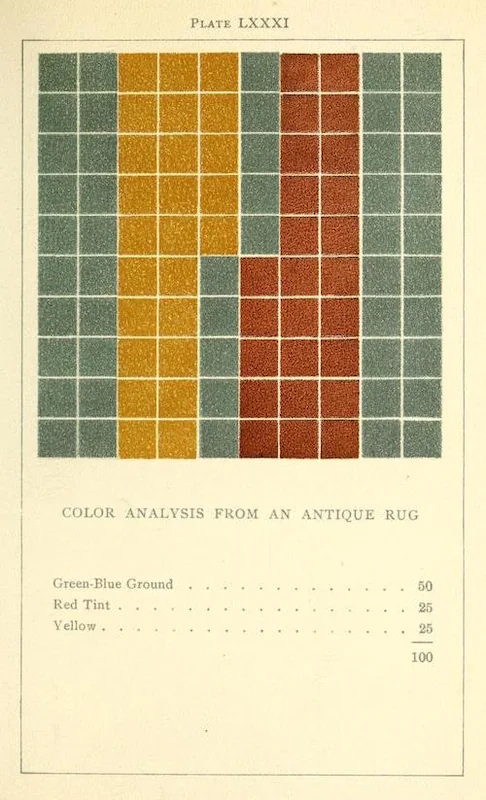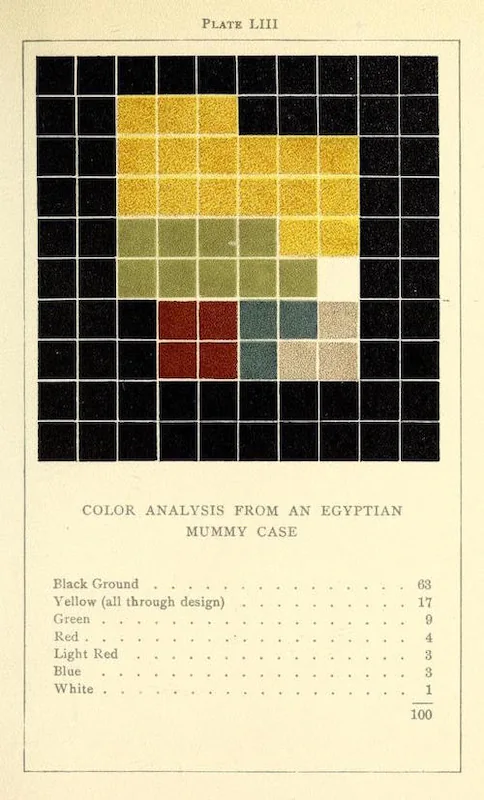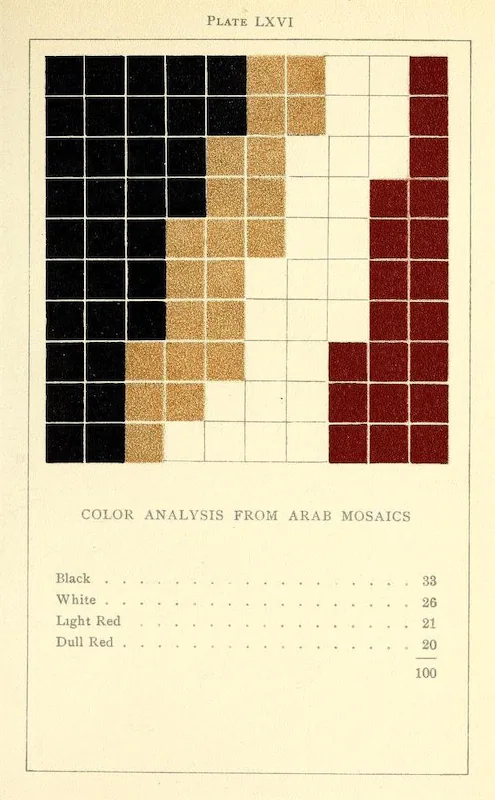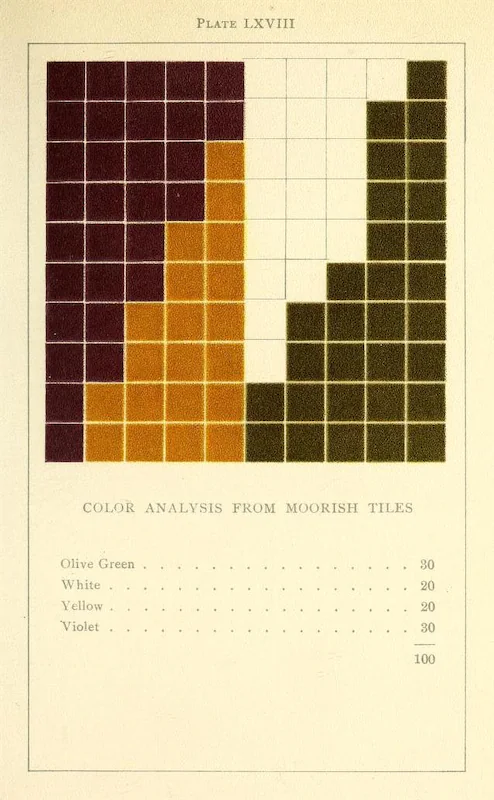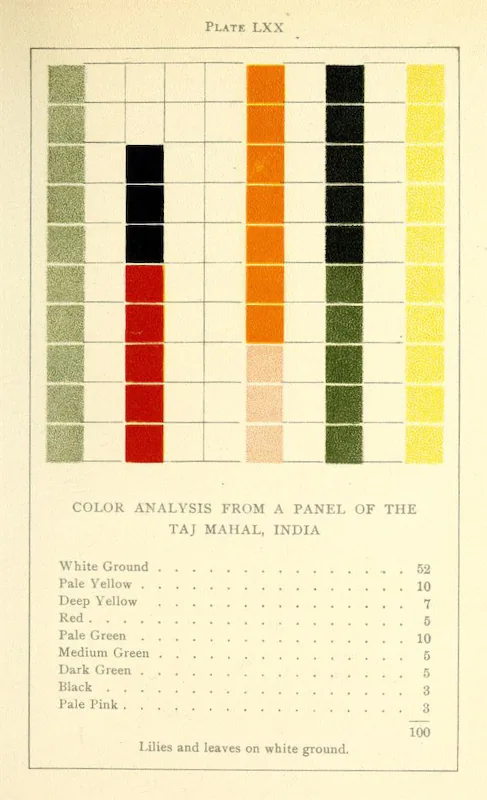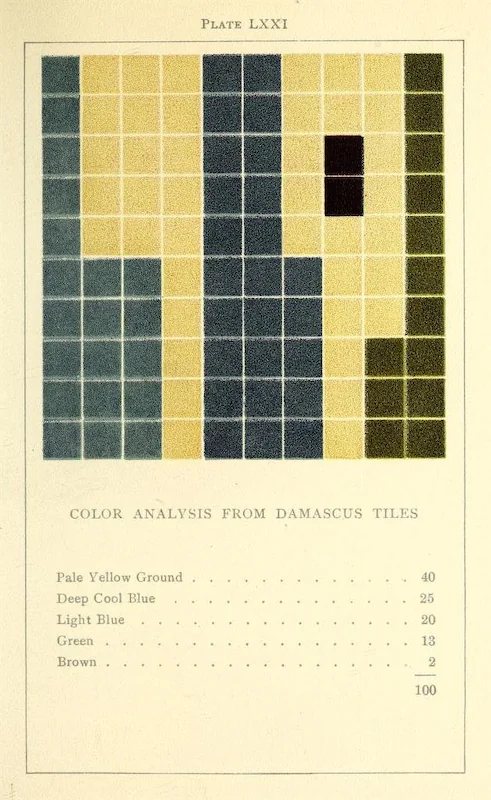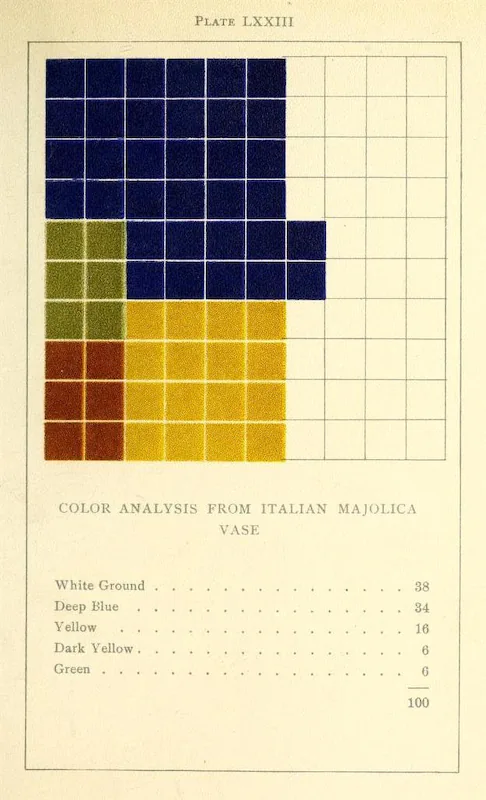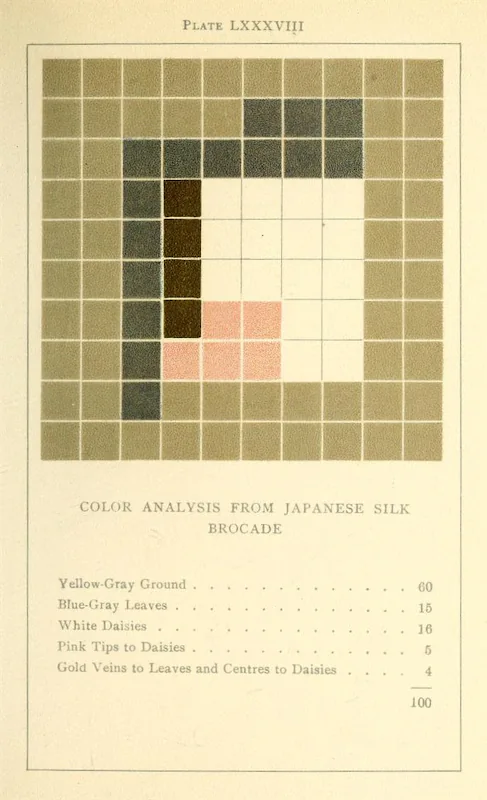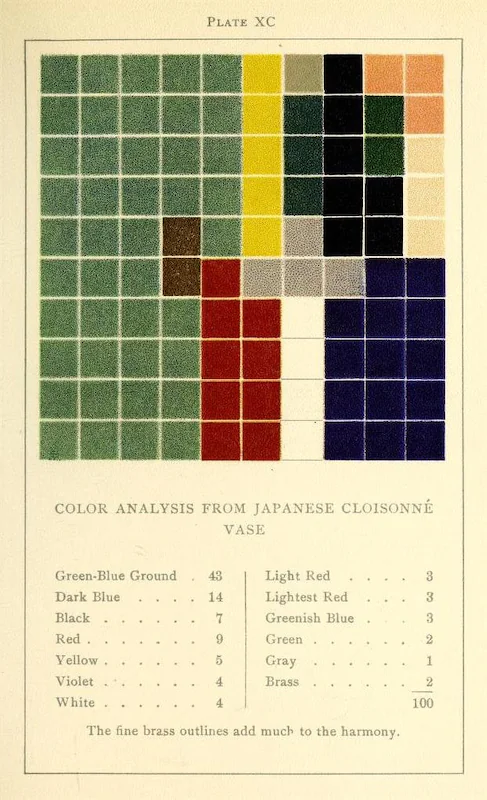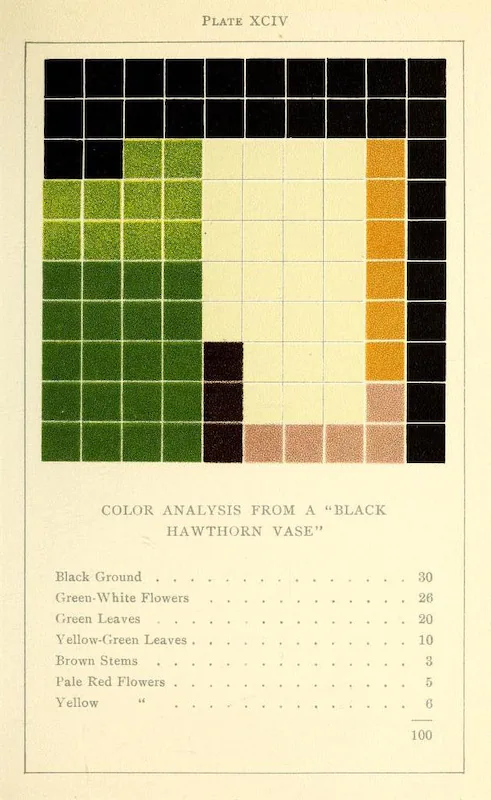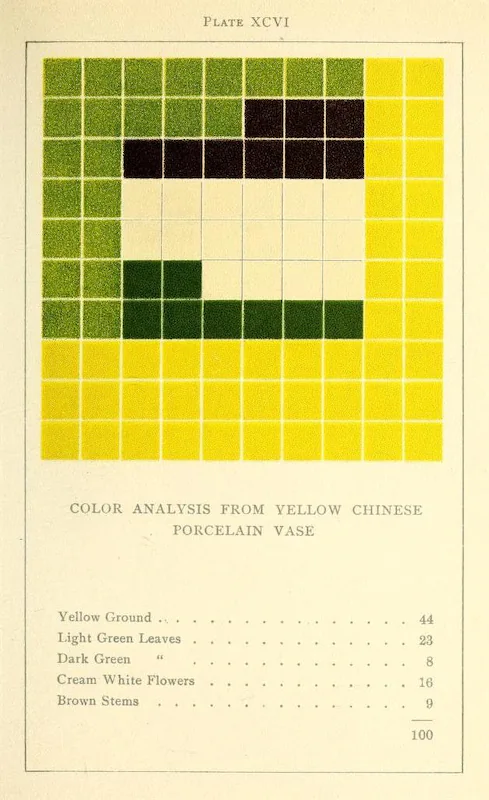


Resembling a mesmerising fusion of De Stijl abstraction and the geometric allure of Tetris, these captivating colour charts originate from Emily Noyes Vanderpoel’s 1902 magnum opus, *Color Problems: A Practical Manual for the Lay Student of Color*. In this seminal work, the American artist meticulously presents 117 plates that analyse colours across a diverse array of objects, from ancient Assyrian tiles and Persian rugs to the natural beauty of stones and butterflies.
The enigma of Vanderpoel’s method lies in her intriguing juxtaposition of objects with their colour abstractions, encouraging students to grasp the process through keen observation alone. Eschewing elaborate explanations, she emphasises the power of visual experience over analytical dissection, choosing instead to quantify colour’s profound impact on the imagination. Recognising the ineffable nature of colour, Vanderpoel opts for brevity in her text, allowing the vivid plates to articulate her insights.
Her work artfully interweaves poetic and scientific perspectives on colour, which she evocatively describes as “the music of light.” Vanderpoel draws on the wisdom of luminaries like Chevreul, Goethe, and Ruskin, delving into the intricate dance of light with the retina’s cones and rods. She even sprinkles in delightful anecdotes, such as Algerian women drawing colour inspiration from boxes of butterflies for their embroidery.
Vanderpoel’s colour grids operate as relational fields, systematically arranging hues, tints, and shades in geometric patterns with precision. Although she leaves her technique largely unexplained, her method anticipates the abstractions of later art movements and aligns with modernist explorations of relational systems. Her work with colour parallels Gertrude Stein’s linguistic innovations in *Tender Buttons*, both artists striving to systematise their respective mediums.
In her concluding remarks, Vanderpoel broadens the notion of “harmony” to encompass daily life, underscoring the influence of women’s attire on their environment. She advocates for a deeper understanding of colour to enhance both personal and professional realms, urging everyone to seek inspiration from nature.
Published when Vanderpoel was fifty-nine, *Color Problems* was intended for amateurs such as decorators and gardeners, promoting a democratised approach to colour theory. Vanderpoel believed that every gradation of light connects back to nature, echoing F. W. Moody’s sentiment that “nature is perfect in colour.” Recently reprinted by The Circadian Press, her book has rekindled interest in her pioneering analyses, forging a bridge between historical art and contemporary appreciation.